
Close


MP5 FRT: How This Trigger Works and Why It’s Getting Attention
Struggling to keep your trigger finger steady during rapid fire with an MP5? The MP5 FRT (forced reset trigger) is a drop-in replacement that mechanically pushes the trigger forward after each shot, enabling fast, controlled bursts without altering the firearm’s semi-automatic classification. By using the bolt’s rearward energy to reset the trigger instantly, it lets you maintain a natural, rhythmic pull—reducing fatigue and improving accuracy during follow-up shots. To use it, simply swap out your standard trigger group, ensure the selector is on https://rarebreedtriggertx.com/ semi, and practice a smooth, consistent pull to let the reset work for you.
An MP5 FRT, or forced reset trigger, is a drop-in trigger pack that physically pushes the trigger forward after each shot, mimicking a binary-like cycle while remaining a single-shot per pull. Unlike a standard MP5 trigger—which relies on a simple spring reset and requires a full manual release before the next pull—the FRT’s cam and lever system uses rare breed triggers in stock the bolt’s rearward travel to mechanically reset the trigger blade against your finger. This creates a rapid, bump-fire-like cadence without modifying the receiver or bolt. The key difference: standard triggers give you a deliberate, predictable break at roughly 4–6 pounds, while an FRT trades that control for speed, letting you rip through a 30-round mag in under two seconds with practice. Q: Does the FRT change the MP5’s safety or hammer? A: No, it replaces only the trigger housing internals, keeping the original hammer and safety selector functional. In real handling, the FRT demands a firm grip and a stable stance, because the forced reset can push your finger forward unexpectedly if you’re not braced—something a standard trigger never does.
The MP5 FRT’s forced reset trigger system operates by using the bolt carrier’s forward motion to mechanically push the trigger sear back into its ready position. Unlike a standard trigger, where the shooter must fully release the trigger for the sear to reset, the FRT’s internal lever linkage is struck by the bolt as it chambers the next round. This action forces the trigger forward against your finger, breaking the shot cycle without manual release. The operation follows a strict sequence:
The timing depends on bolt velocity and spring tension, so the reset action feels like a rapid pulse against the fingertip.
The biggest practical difference is that a forced reset trigger for the MP5 physically shoves the trigger forward after each shot, forcing the sear to re-engage before the bolt cycles fully. This means you must keep the trigger pulled, but the gun’s mechanics reset it for you—you never “let go” to fire again. A binary trigger, however, fires one round on the pull and another on the release, so your finger’s movement controls each shot. With an FRT, the reset timing is tied to the bolt’s travel, making it feel like a very fast semi-auto. With binary, the cadence depends entirely on how quickly you lift your finger. Also, an FRT keeps the trigger forward during firing, while binary allows full trigger movement both ways.
With an MP5 FRT, the trigger pull weight typically sits between 4.5 and 6 pounds, noticeably lighter than a standard mil-spec trigger’s 7-8 pounds, though it feels heavier than a tuned match trigger due to the internal sear trip mechanism. The most distinct characteristic is reset travel: expect an extremely short, positive reset of roughly 1-2 millimeters, often described as a tactile “snap” that occurs immediately after the bolt cycles. This minimal distance allows you to ride the trigger and re-engage the sear with almost no finger movement. Unlike standard triggers where you must fully release to reset, the FRT’s short reset travel demands deliberate, feather-light follow-through; if you naturally hold the trigger rearward, the hammer will not trip until you barely ease forward, then press again smoothly without lifting your finger.
For an MP5 forced reset trigger, compatibility hinges on the hammer geometry and trigger pack housing. The drop-in FRT unit works only with full-size MP5, MP5A2, MP5A3, and MP5A4/5 platforms that use the standard SEF or ambidextrous push-pin trigger pack. It will not fit semi-auto-only clones with a paddle magazine release and a clipped, non-standard shelf, such as certain Century Arms AP5-P or Zenith ZF-5 variants unless their packs are swapped for genuine HK or licensed SEF packs. The MP5K and MP5SD platforms are also compatible, provided the pack is the standard size, but the shorter receiver on the K model can cause bolt carrier interference. Always verify the pack’s lower receiver shelf is unmodified, as a welded or reinforced shelf will block the FRT’s sear trip lever. For reliable function, the host must be roller-locked and use factory-weight bolts, not lightweight competition bolts.
Full-size MP5s typically exhibit the most reliable forced reset trigger function due to their longer bolt travel and heavier carrier, which provides a more forgiving timing window for the reset cam. K variants (MP5K/MP5K-PDW) often require a firmer grip or a modified locking piece because their shorter receiver and lighter bolt alter the dwell time, sometimes causing short-strokes or hammer follow. Regarding clones, clone compatibility considerations hinge on sear trip geometry and bolt carrier dimensions; Zenith, MKE, and PTR guns generally accept the trigger with minor fitting, but poorly spec’d clones from Turkish or budget sources may need rail or shelf filing. The bolt’s rear lug must match the FRT’s trip arm precisely, or you will get inert clicks instead of resets. Always test with a dummy round first.
Q: Are MP5K clones with welded rail systems still compatible with this FRT?
A: Yes, but the rail can obstruct the trip arm’s travel on some K clones; you may need to shave the rail’s rear edge by 0.5mm for clean rotation.
Installing an MP5 forced reset trigger typically does not require a professional gunsmith, but it does demand specific tooling. Most drop-in units replace the factory trigger pack’s hammer and sear, needing only a punch set, a bench block, and a small hammer to drift out the retaining pins. However, specialized MP5 trigger pack tools—like a sear spring jig or a bolt catch punch—may be necessary if your platform uses a clipped or modified pack. The process is straightforward for the standard SEF-style lower, but ambidextrous or ambi-lower variants often require extra patience to align the spring tension. While a master armorer is not mandatory, a roll pin starter punch prevents damage to the housing. You must also ensure the hammer strut is correctly seated; otherwise, the trigger will bind. If your MP5 uses a welded semi-auto shelf, expect minor fitting.

| Aspect | Requirement |
|---|---|
| Gunsmith | Not required for drop-in units |
| Special tools | Punch set, bench block, roll pin starter |
| Risk factor | Spring misalignment if not careful |

Even with compatible hosts, the MP5 FRT trigger pack often presents fitment issues rooted in the receiver’s tolerances. A common problem is the trigger housing sitting too loose, causing the trigger bar to miss the hammer sear; fix this by shimming the rear of the pack with thin brass stock. Conversely, if the selector switch binds between semi and binary positions, the trigger pack’s shelf is likely catching on the receiver’s pin channel—file the shelf’s edge incrementally until the throw is clean. Another frequent annoyance is the bolt carrier dragging on the trigger’s hammer face after installation; polish the hammer’s rear surface and verify the carrier’s cam pin isn’t protruding. Never force the trigger pack into place; if it requires excessive pressure, check for a burr on the receiver’s trigger well and remove it with a fine stone.
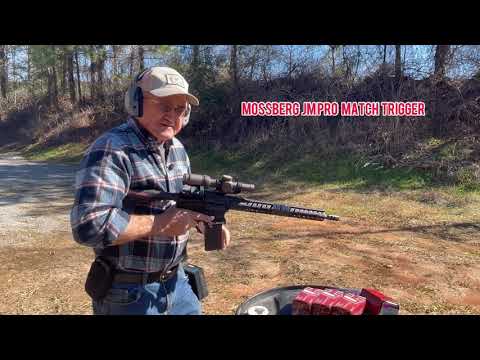
To maximize control with an MP5 forced reset trigger, lock your support hand far forward on the handguard and drive the firearm into your shoulder with a firm, consistent stock weld. The FRT’s reset is violent, so you must ride the trigger by keeping constant forward pressure on the blade, allowing the sear to trip only after the bolt fully cycles—do not slap or release it. Use a high, tight grip with your firing hand, thumb over the safety lever if possible, to resist muzzle climb from the roller-delayed action. mp5 frt trigger Short, controlled bursts of 3–5 rounds work best; avoid limp-wristing, as the FRT depends on the receiver’s inertia to reset properly.
Let the trigger reset your finger—do not pull it—or you will lose the forced-reset timing and induce stoppages.
Practice dry-firing with snap caps to internalize the reset point, then transition to live fire, keeping your sights level through each burst.
To manage the MP5 FRT cyclic rate, lock your support hand high on the fore-end, thumb-over-bore, and pull rearward with 15–20 percent of your total arm strength into the shoulder pocket. Position your lead foot forward, aligning the rifle’s recoil axis directly over your sternum, while your rear foot stays perpendicular for lateral torque resistance. Keep elbows tucked, not flared, to reduce muzzle climb during the out-of-battery reset phase. A slight forward lean, roughly 10 degrees, lets the forced reset’s jarring impulse transfer into your core rather than your wrists, preventing grip fatigue. Do not choke the pistol grip; maintain a 60/40 support-side pressure split. Use a high, firm cheek weld to keep the sight plane stable across the three-round burst cadence.
To maximize an MP5’s forced reset trigger, master the tactile discipline of **riding the reset for rapid follow-up shots**. Keep constant forward pressure on the blade, releasing only the minimal distance required for the sear to re-engage—typically 2–3 millimeters. As the bolt cycles, the trigger will push your finger forward; resist lifting it, instead allowing the mechanism to drive the reset. The instant you feel the crisp click, press straight back again, maintaining a rigid grip so the firearm’s recoil doesn’t disturb your cadence. This creates a rhythmic, controlled burst where each shot is a deliberate, split-second decision.

To build accuracy at full speed with an MP5 forced reset trigger, start with the two-shot burst drill: send two rounds, reset the trigger, and reacquire the front sight before the second round breaks. This forces your grip to remain rigid while the bolt slams forward. Then progress to a three-round cadence drill on a single silhouette, focusing on a compressed trigger pull—press, reset, press—without letting the muzzle climb past the upper chest. Use a 5-yard target to ingrain the rhythm, then move to 10 yards, keeping your support-hand pressure high on the handguard. Finally, run a failure drill: two to the body and one to the head at full speed, consciously guiding the third shot with your index finger’s reset, not your shoulder. The goal is to let the FRT’s reset time become your shot timer, not your brain.
Accuracy at full speed with an MP5 FRT hinges on rhythmic trigger resets and maintaining a rigid support-hand grip, drilled progressively from two-shot bursts to failure drills.
Upgrading to an FRT on your MP5 transforms it from a deliberate semi-auto into a platform where the trigger reset becomes the sole limiter, letting you place follow-up shots with the same muscle memory as a full-auto without the legal class. The real-world benefit is a dramatic reduction in split times during controlled pairs or failure drills—your finger never leaves the sear, so recoil recovery and target reacquisition blur into one fluid motion. Because the FRT maintains the MP5’s roller-delayed lockup, you retain the legendary reliability and smooth cycling while gaining a faster cadence that keeps the muzzle flat. A practical trade-off: FRTs demand a firm, consistent trigger finger; limp-wristing or riding the reset will cause hammer-follow and malfunctions. Q: Does an FRT make your MP5 run faster than a binary trigger? A: Yes, for rapid double-taps, because it fires once on pull and once on release with no shoe travel lag. For defensive, competition, or just range efficiency, it’s the closest you’ll get to automatic fire without the NFA wait.
The forced reset trigger (FRT) on your MP5 mechanically shoves the trigger forward after each shot, using the bolt’s return travel to reset the sear *before* your finger physically releases. This removes the natural pause where you’d normally wait for spring tension to reset the trigger, collapsing the time between rounds. The result is a dramatically higher effective rate of fire without altering the bolt’s cyclic speed—you simply re-engage the trigger earlier in the recoil cycle. In practice, this works as a repeating sequence: fire, let the bolt push the trigger forward, press again, fire. Because your finger never fully lifts, your follow-up timing aligns with the mechanism’s rhythm, not your own reaction speed. This yields a practical cadence roughly double that of a standard trigger, though still slower than true full-auto.
With an FRT on your MP5, recoil mitigation with the right technique becomes less about fighting the gun and more about guiding it. The key is to lean into the weapon’s natural tendency to climb—use a firm, slightly forward-biased grip and keep your support elbow pulled in tight. This turns the rapid cyclic rate into a flat, controllable push rather than a violent snap. By pre-loading your stance and letting the FRT’s faster reset work for you, you’ll find the front sight barely lifts off target. Practice a steady, consistent shoulder weld, and you’ll notice muzzle rise shrinks to a minor bob, letting you keep shots on target without muscling the gun down.
Q: Does the FRT itself reduce muzzle rise, or is it all technique?
A: It’s mostly technique—the FRT just exposes what you’re doing wrong. With a proper tight stance and controlled trigger pull, the faster cycle actually helps you stay on target because you’re not waiting for a long reset to reset your aim. But if your grip is loose, the MP5 will still climb.
The operational lifespan of an MP5 FRT hinges on disciplined maintenance, as the trigger pack’s sear surfaces and reset cam endure accelerated wear under sustained rapid fire. After high round counts, carbon fouling and residual lubricant viscosity directly impede the forced-reset mechanism, so you must strip and ultrasonically clean the pack every 1,000–1,500 rounds, replacing the hammer spring and trigger return spring proactively to maintain positive reset force. Lubrication strategy shifts from wet to thin-film grease on the cam tracks, since excess oil attracts powder residue and causes sluggish resets at elevated temperatures. Inspect the bolt carrier’s trip lug for peening, as deformation there delays the FRT’s sear release. High-round-count FRT reliability demands strict adherence to a round-based maintenance schedule, not symptom-driven repairs, because a single skipped cleaning cycle can induce double fires or dead triggers. Replace the trigger housing’s roll pins if they walk under recoil stress, and verify the reset spring’s tension with a pull gauge—weak springs fail unpredictably, whereas scheduled replacement keeps the mechanism cycling true.
When selecting the best MP5 FRT, prioritize trigger reset reliability under rapid firing, as inconsistent sear engagement will cause malfunctions. Check the bolt carrier profile for compatibility with your MP5 clone’s receiver—roller-delayed systems vary in tolerance. Inspect the trigger housing fit; a loose unit induces hammer follow, while excessive tightness binds the trigger pack. Verify the safety selector geometry, ensuring it clears the FRT’s trip bar without friction. Test dry-fire reset speed before purchase, since a sluggish reset negates the forced-reset advantage. Examine the hammer spring weight—too light causes light primer strikes, too heavy slows cyclic rate. Confirm the FRT works with both semi-auto and binary-style bolt carriers, as some models require proprietary parts. Finally, assess build materials: CNC-milled steel internals outlast cast alternatives under sustained use.
The longevity of an MP5 FRT hinges on its material quality and coating integrity, as these directly determine wear resistance under rapid fire. A trigger group milled from billet steel, rather than cast or sintered metal, maintains dimensional stability across thousands of cycles, preventing trigger sear creep. Equally critical is the coating—a robust nickel-boron or nitride finish reduces friction and resists carbon fouling, ensuring consistent reset force. Without a hard, non-porous surface, unprotected steel corrodes from sweat and solvents, accelerating spring fatigue and sear edge rounding. Surface hardness (e.g., 58+ HRC on contact points) prevents peening, while a slick coating minimizes lubrication reliance. Inspect for uniform coverage, especially inside the hammer pocket, as thin spots fail first. A properly coated, high-grade material unit outlasts consumer-grade parts by several factors.
Comparing spring tension across MP5 FRT trigger packs reveals that the recoil impulse of different ammo types directly dictates optimal spring rates. Standard-pressure 115-grain loads cycle reliably with factory-tension springs, but hot 124-grain +P rounds can cause premature bolt bounce unless spring tension is increased. Conversely, lightweight 100-grain frangible ammunition often fails to fully compress a stiff spring, leading to short-stroking or failure to reset. For sustained use with subsonic 147-grain loads, a reduced-tension spring ensures consistent trigger reset, yet the same spring may produce slam-fires with high-pressure ammunition. Tuning requires testing your specific ammo lot, as spring tension must match both bullet weight and pressure curve. A chronograph and incremental spring swaps are essential to verify reliable, repeatable function.
Match spring tension to your primary ammo’s pressure and weight—hot loads need more force, light loads need less; test per lot for reliable reset and ps90 frt trigger no bolt bounce.
A reliable warranty is non-negotiable for an MP5 wot trigger FRT; reputable manufacturers typically offer at least a one-year guarantee covering sear and trigger-pack breakage, so verify the exact terms before purchase. Prioritize customer support that provides phone or email troubleshooting, not just chatbot responses, since a poorly fitted trigger pack may require expert diagnostics. In cheaper alternatives, avoid any unit lacking a clear return policy, as tolerance issues often surface only after installation. Steer clear of sellers who cannot specify the material hardness of the hammer or the spring’s cycle count, as these are the first failure points. Ultimately, the cheapest option usually skimps on post-sale support, leaving you with a non-functional trigger and no recourse. Customer support responsiveness is your best insurance against a costly paperweight.
